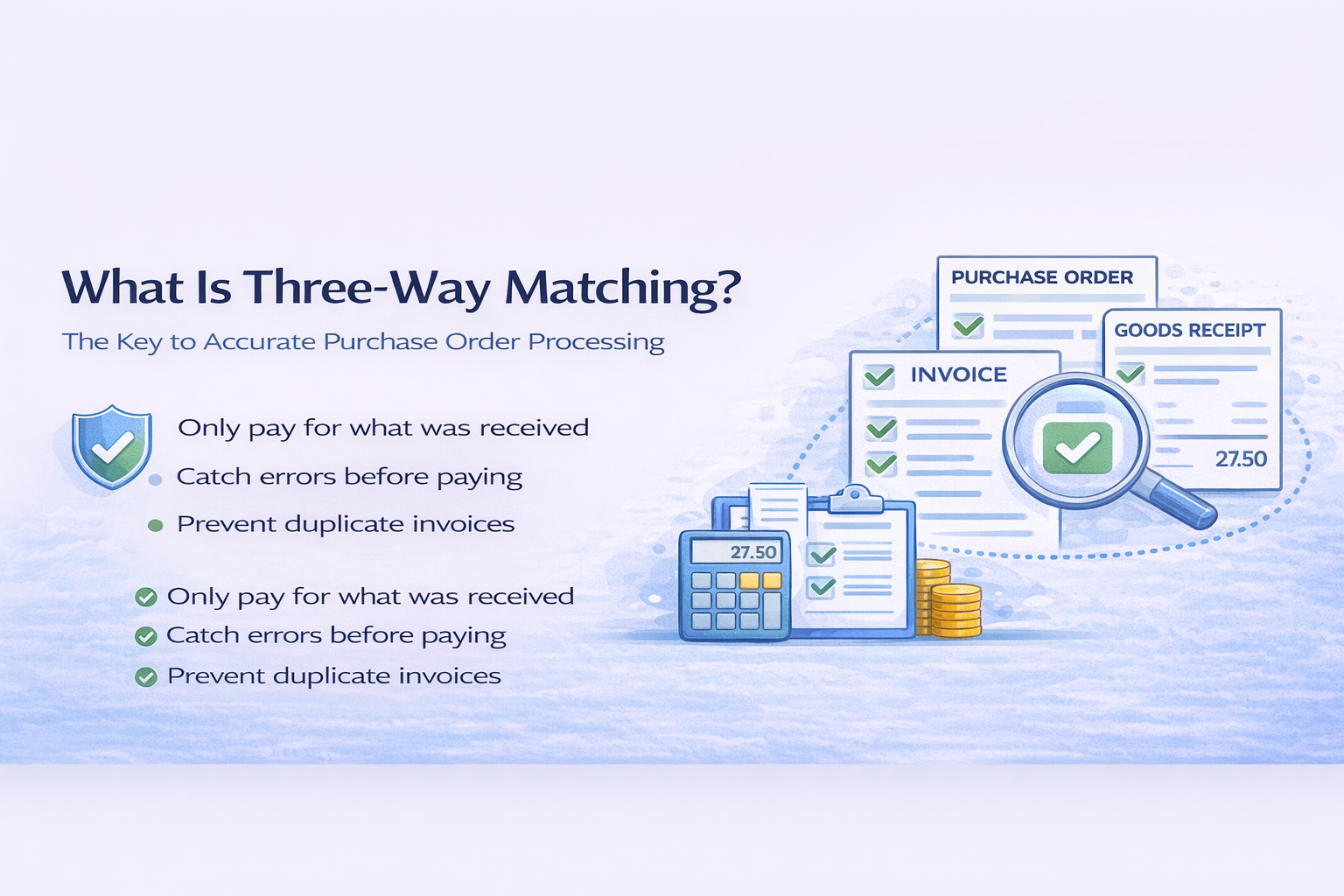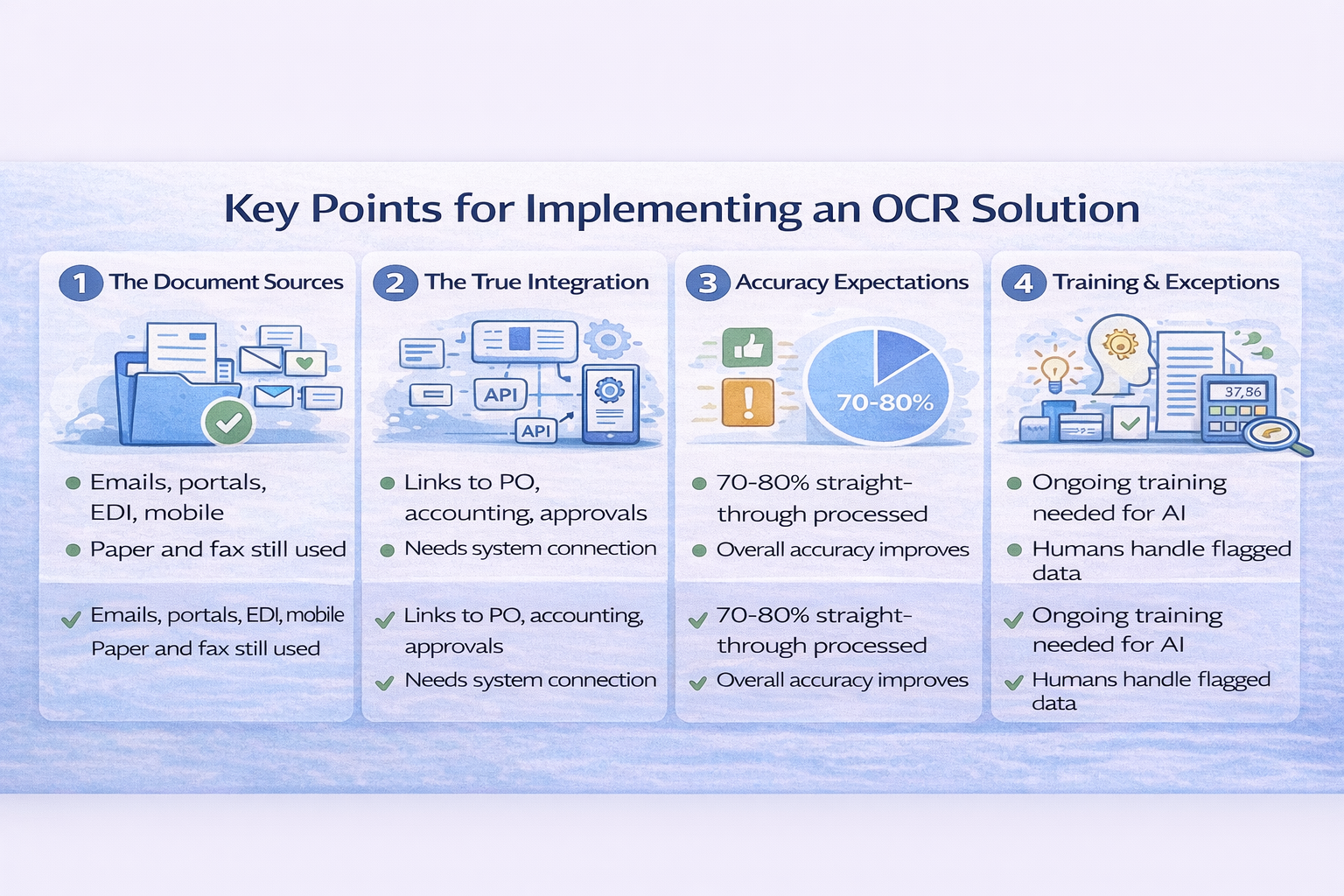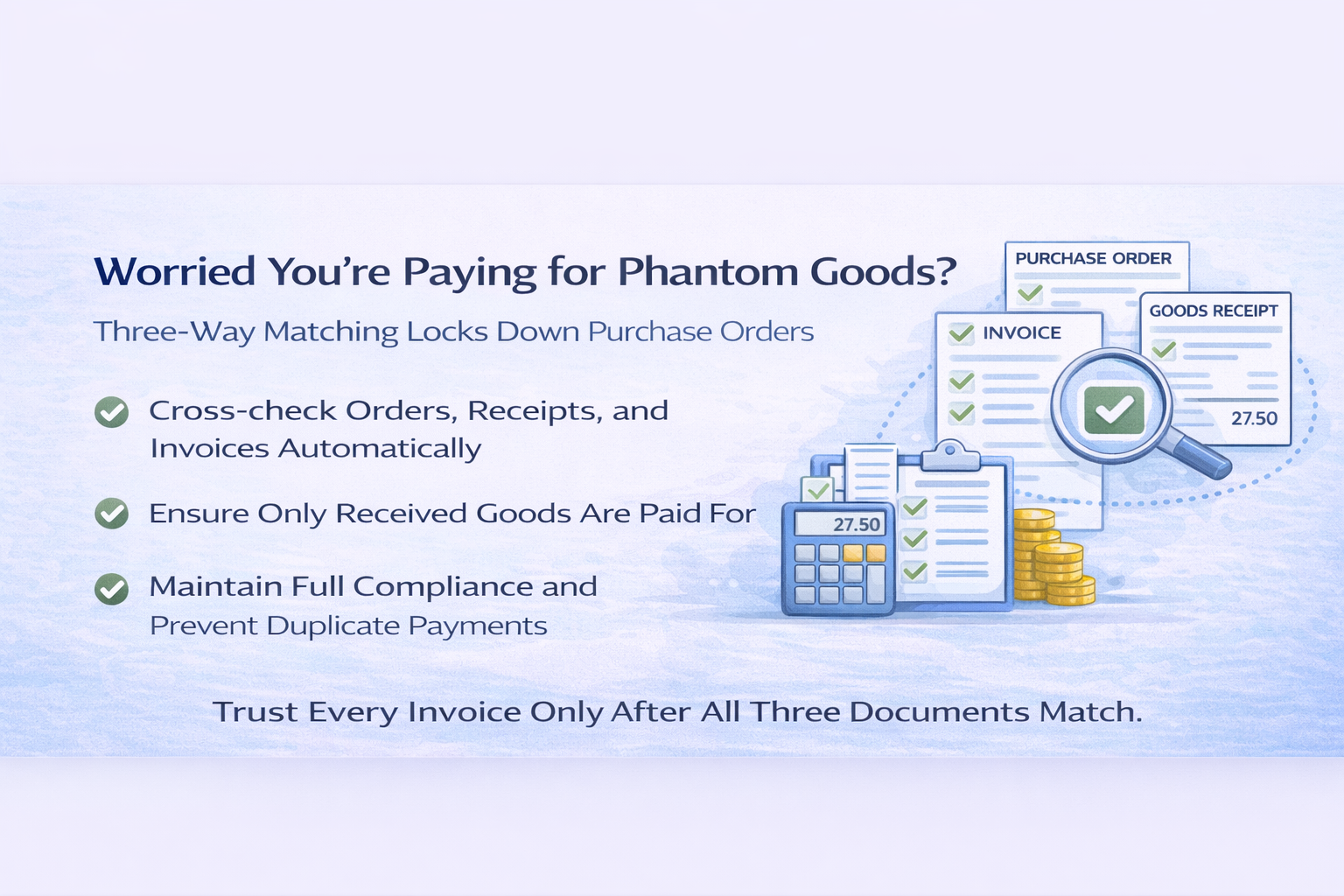
Understanding Three-Way Matching – The Foundation of Purchase Order Control
Part 2: What You Need to Consider
The Foundation Required:
Three-way matching only works if you have:
- Structured PO process: Can’t match if you don’t have reliable POs
- Goods receipt discipline: Someone must log what arrives
- Invoice capture: Need to get invoice data into the system
If any of these is weak, matching won’t work. This is why it’s often part of a broader process improvement, not a standalone project.
The Process Design Questions:
Who logs goods receipt?
- Warehouse team?
- Receiving department?
- Department that ordered?
- Automated (barcode scanning)?
This seems simple but needs clear ownership and accountability.
What happens when things don’t match?
- Who investigates?
- What’s the escalation path?
- How long do you hold payment?
- How do you communicate with suppliers?
Define these workflows before implementing technology.
How do you handle services vs goods? Services are harder because there’s no physical “receipt”:
- Milestone-based payment?
- Timesheet approval?
- Deliverable sign-off?
- Regular periodic invoicing?
Each needs a different matching approach.
The Integration Challenge:
This is typically the hardest part. Three-way matching requires data from:
- PO system (what was ordered)
- Inventory/receiving system (what arrived)
- AP system (what’s being invoiced)
- Supplier master (supplier information)
- Payment system (to schedule payment)
These systems need to communicate seamlessly. If they don’t, you’re manually combining data – which defeats the purpose.
Ready to let AI protect your procurement?
Contact Systematics Software Ltd today to explore how AI-powered solutions can revolutionise your operations and prepare you for the future of technology.
Nam aliquet ante porta, gravida elit, at fringilla felis suscipit.
Understanding the Exception Workload:
Don’t underestimate this. Even with good processes:
- 15-25% of invoices will need human review
- Some suppliers consistently have issues
- Some product types are problematic
- First orders from new suppliers rarely auto-match
You need people with:
- Authority to investigate
- Relationship with procurement and suppliers
- Understanding of your products/services
- Patience for detective work
The Supplier Relationship Angle:
Three-way matching sometimes reveals supplier issues:
- Consistent over-invoicing
- Poor delivery practices
- Documentation problems
- Pricing errors
How you handle this matters. It’s a conversation opportunity, not an accusation. Good suppliers appreciate the feedback and tighten up their processes.
The Measurement Question:
How do you know it’s working? Track:
- Match rate: What percentage auto-match?
- Exception types: What causes mismatches?
- Resolution time: How long to resolve exceptions?
- Payment timing: Days from invoice to payment
- Error prevention: Caught before payment vs after
- Cost per invoice: Total process cost
These metrics help you improve continuously.
What About Different Business Types:
Retail/Distribution:
- High volume, repetitive purchases
- Barcode scanning often available
- Relatively straightforward
- High auto-match rates achievable
Manufacturing:
- Raw materials often by weight/volume
- Tolerance management critical
- Quality checks factor in
- More complex but manageable
Professional Services:
- Services delivery confirmation needed
- Time tracking integration
- Milestone-based approaches
- Lower auto-match rates, more judgment needed
Construction/Projects:
- Progress payments
- Retentions and variations
- Multiple suppliers per project
- Complex but valuable
The Cultural Shift:
This isn’t just a technology change:
- Finance becomes less data entry, more analysis
- Procurement needs PO accuracy (it matters now)
- Receiving must log properly (not optional anymore)
- Suppliers need better documentation
Some people embrace this. Others resist. Change management is as important as technology.
Ready to deploy AI protection across your procurement?
Contact Systematics Software Ltd today to explore how AI-powered solutions can revolutionise your operations and prepare you for the future of technology.
Nam aliquet ante porta, gravida elit, at fringilla felis suscipit.
Common Obstacles:
“We don’t always create POs” Then matching won’t work for those transactions. You either need to enforce POs or have an exception process for non-PO invoices.
“Our receiving team won’t use the system” This is a deal-breaker. If goods receipt isn’t logged, you can’t match. Sometimes mobile apps or barcode scanners help with adoption.
“Suppliers won’t provide PO references” Education and relationship management. Most suppliers cooperate once they understand it speeds up payment.
“Our systems are too old to integrate” This is often the real blocker. Legacy systems that can’t share data make matching very difficult. Sometimes you need broader system modernisation first.
Starting Point Considerations:
Before pursuing three-way matching, honestly assess:
- Do you consistently create POs? (If not, fix this first)
- Is goods receipt logged systematically? (If not, fix this first)
- Can your systems share data? (If not, integration project needed)
- Do you have people to handle exceptions? (If not, plan for this)
- Will stakeholders cooperate? (If not, change management needed)
If the answer to most is “no” or “unclear,” you might need foundational work first.
Want to discuss whether three-way matching makes sense for your business?
Every business is different, and what works for one might not work for another. I’m happy to share what I’ve learned about when it works well and when it doesn’t.
Book a time to talk: https://calendly.com/jiteshlakhani
Or call: 0207 031 9810