Understanding Approval Workflow
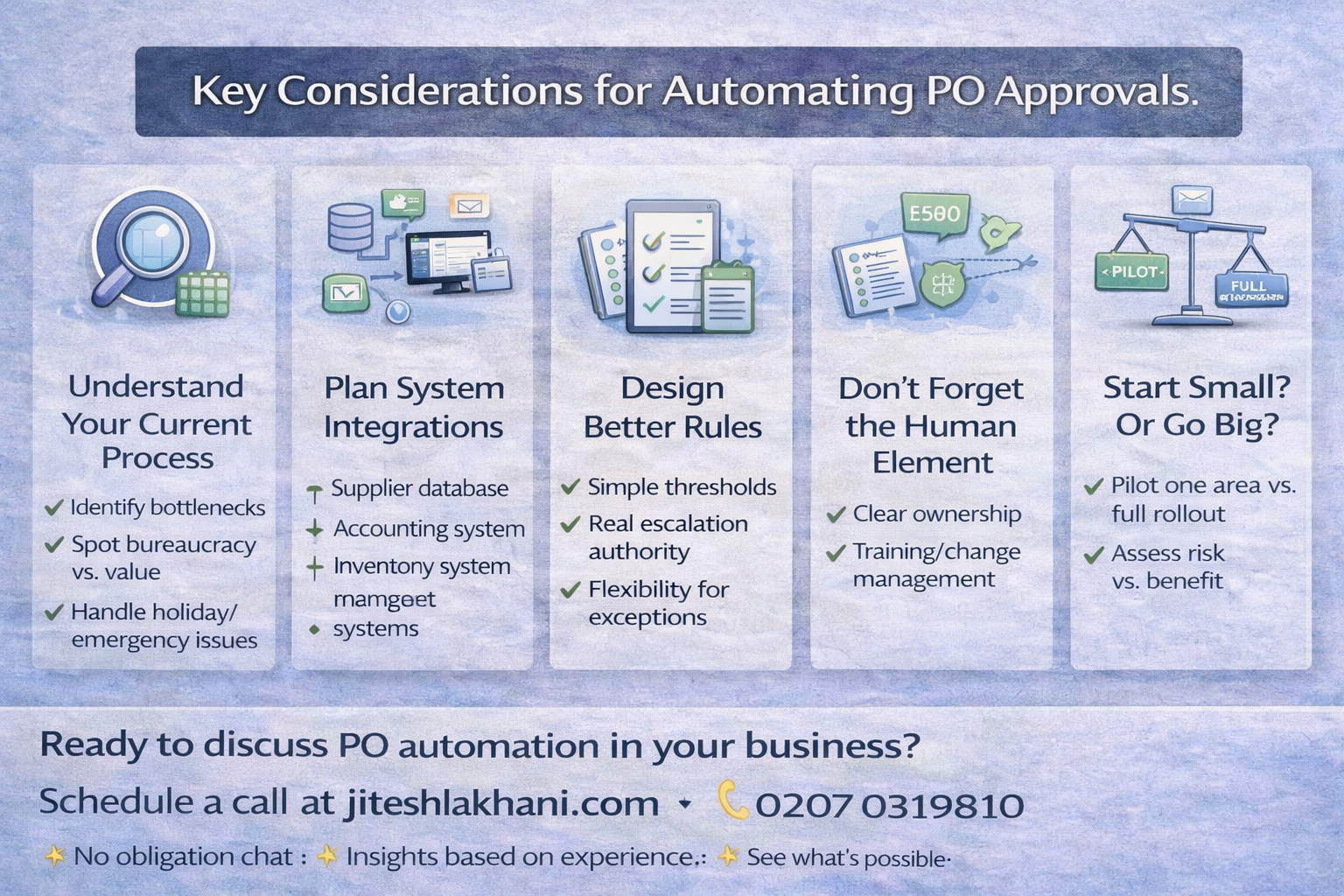
Understanding Your Current Process First:
Before automating anything, you need to really understand how approvals work now:
- Where are the actual bottlenecks? (Often not where you think)
- Which approvals add value vs. which are just bureaucracy?
- What happens when someone’s on holiday?
- Where do emergency purchases break the rules?
The Integration Challenge:
Approval workflows don’t exist in isolation. They need to connect to:
- Your accounting system (for budget checks)
- Your supplier database (for supplier information)
- Your inventory system (for stock purchases)
- Your payment systems (once approved)
This is where many businesses struggle. It’s not just about the approval tool – it’s about making your systems communicate.
Designing Rules That Make Sense:
The most common mistake is replicating your current process digitally. Instead, use this as an opportunity to design better rules:
- Simple value thresholds (under £500, £500-£5k, etc.)
- Clear category ownership (IT purchases go to IT, always)
- Escalation that reflects real authority and risk
- Flexibility for genuine exceptions
The Human Element:
Technology doesn’t solve everything. You still need:
- Clear ownership (who’s responsible for what?)
- Training (people need to understand the new process)
- Change management (some people will resist)
- Continuous improvement (refine rules based on experience)
s – Moving Beyond Email Chaos
Part 1: What Modern PO Approval Systems Actually Do
The Challenge Most Businesses Face:
If your purchase order approvals currently involve exporting PDFs, sending emails, and chasing people for responses, you’re not alone. This is how most businesses still operate. Someone creates a PO, emails it to a manager, who forwards it to finance, who may need to involve someone else. Days pass. People are unavailable. The supplier is waiting. Nobody knows where things stand.
This isn’t just frustrating – it’s expensive and risky. But more importantly, it creates data problems that cascade through your business.
Ready to let AI protect your procurement?
Contact Systematics Software Ltd today to explore how AI-powered solutions can revolutionise your operations and prepare you for the future of technology.
Nam aliquet ante porta, gravida elit, at fringilla felis suscipit.
Starting Small vs. Going Big:
You have two approaches:
Option A – Pilot One Area: Pick your highest-volume or most problematic category. Get it working well. Learn lessons. Then expand. This reduces risk but takes longer overall.
Option B – Implement Across the Board: Requires more upfront work and higher risk, but everyone gets benefits simultaneously and you avoid running two systems in parallel.
There’s no universally right answer – it depends on your risk tolerance and resources.
Common Pitfalls to Avoid:
Over-Complicating Rules: The temptation is to automate every exception and special case. Resist this. Start with rules that cover 80% of situations. Handle the rest manually at first.
Forgetting About Delegation: People go on holiday, leave the company, or get promoted. Your system needs to handle this gracefully.
Ignoring the Exceptions: Some purchases will always need human judgment. Make sure there’s an easy exception path that doesn’t break the process.
Not Measuring Success: Define what success looks like before you start:
- Average approval time
- Percentage that auto-route correctly
- User satisfaction
- Time saved
The Data Quality Question:
This is really what it’s all about. Poor approval processes create poor data:
- No consistent record of who approved what
- No timing information for analysis
- No link between approval and outcome
- No way to learn and improve
Good approval workflows create rich, structured data that becomes the foundation for everything else – reporting, analytics, forecasting, and eventually AI.
Ready to deploy AI protection across your procurement?
Contact Systematics Software Ltd today to explore how AI-powered solutions can revolutionise your operations and prepare you for the future of technology.
Nam aliquet ante porta, gravida elit, at fringilla felis suscipit.
Questions to Ask Yourself:
Before reaching out to anyone about approval automation, consider:
- What percentage of your POs currently need chasing?
- How long does an average approval take?
- How often do urgent purchases bypass the process?
- Can you produce an audit trail of approvals easily?
- Do you know where your bottlenecks actually are?
If you don’t know these answers, you’re not alone – most businesses don’t. But finding out is the first step.
Want to discuss how approval workflows might work in your specific business?
I’m happy to share what I’ve learned from helping other businesses tackle this challenge. No obligation – sometimes an outside perspective helps you see the possibilities.
Book a time to chat: https://calendly.com/jiteshlakhani
Or call directly: 0207 031 9810