The Approval Bottleneck: Why Your Purchase Orders Are Stuck in Email
The Black Hole Where Business Momentum Dies
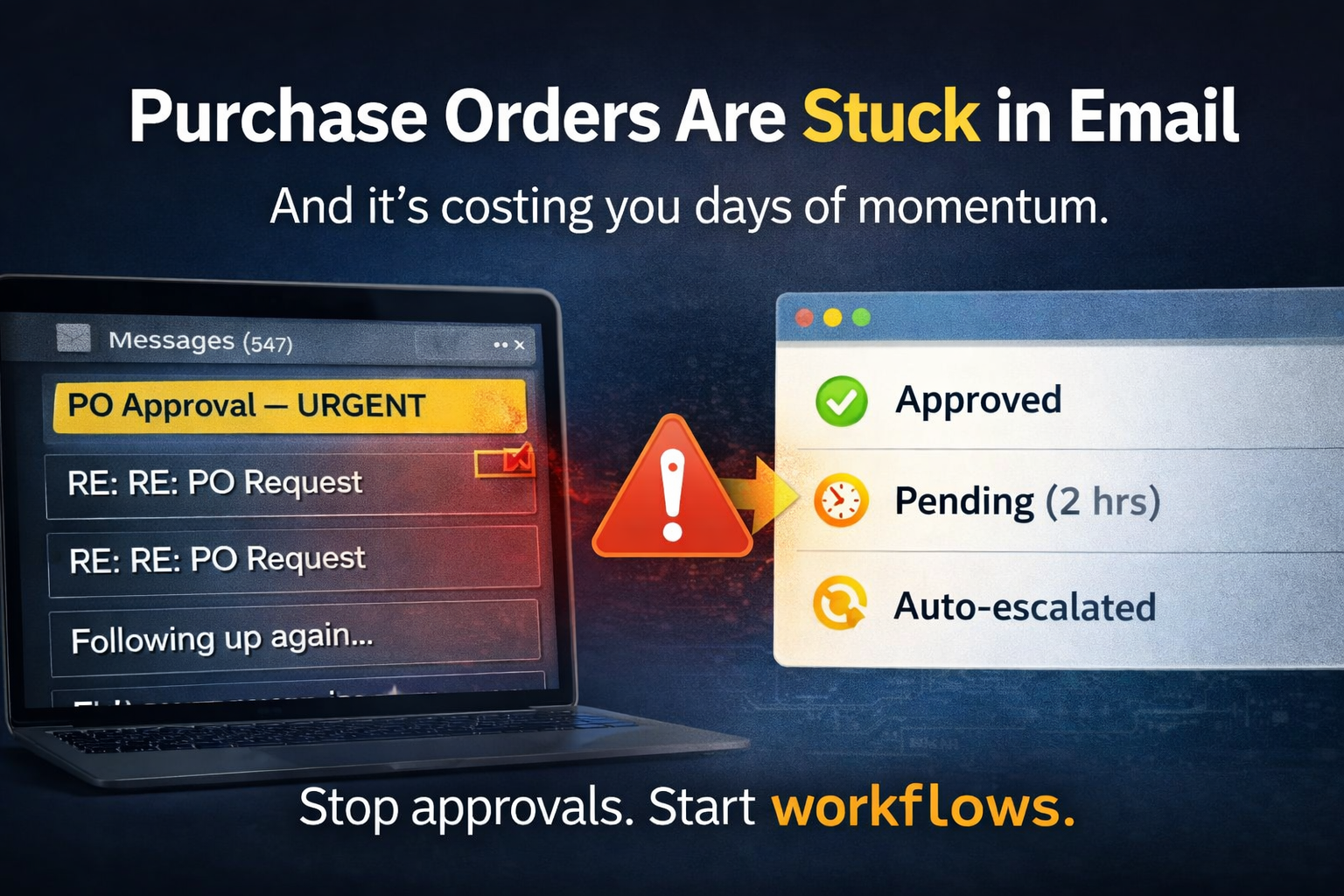
An employee needs to purchase something. They create a request. Email it to their manager. Manager is in meetings. Email sits. Hours pass. Days pass.
Meanwhile:
- The supplier is waiting
- Prices might change
- The employee can’t proceed
- The business loses momentum
This happens hundreds of times per month in your organisation.
Let’s talk about why email is where purchase orders go to die—and what actually works instead.
Why Email Feels Like It Works (But Doesn’t)
Email is universal. Everyone has it. Everyone checks it (sort of). It’s free. It’s flexible.
For urgent one-off communications, email is fine.
For systematic business processes like purchase order approvals, email is a disaster.
The Email Approval Problem
Problem 1: No Visibility Where is that PO? Is it approved? Did the manager see it? Did they forget? Did it get caught in spam? Nobody knows.
Problem 2: No Accountability Who’s responsible when approvals delay? The requestor didn’t follow up? The manager didn’t respond? The email got lost? Impossible to determine.
Problem 3: No Tracking How long do PO approvals actually take? Which managers are bottlenecks? What’s the average cycle time? Email doesn’t tell you.
Problem 4: No Escalation PO sits in email for a week. Should it escalate to someone else? Automatically escalate after a threshold? Email can’t do this.
Problem 5: No Integration Once approved, someone needs to manually create the PO in the system, send it to the supplier, track acknowledgment. More emails. More manual work.
Problem 6: No Audit Trail Six months later, auditor asks: “Who approved this PO?” You’re searching through email. Good luck.
What This Costs
Time Cost: Average PO approval cycle via email: 5-7 days Average time that actually requires human decision-making: 5 minutes
You’re paying for 5-7 days to get 5 minutes of work done.
Opportunity Cost: While waiting for approval:
- Projects are delayed
- Supplier relationships suffer
- Urgent needs become emergencies
- Staff work around the system (creating risk)
Workaround Cost: When the proper approval process is too slow, people find shortcuts:
- Split purchases to stay under approval thresholds
- Use personal cards and expense later
- Go ahead without approval and apologise later
Each workaround increases risk and reduces control.
Organisational Cost: Slow approvals signal that leadership doesn’t care about momentum. Staff learn the organisation is bureaucratic and unresponsive. Good people leave.
Ready to let AI protect your procurement?
Contact Systematics Software Ltd today to explore how AI-powered solutions can revolutionise your operations and prepare you for the future of technology.
Nam aliquet ante porta, gravida elit, at fringilla felis suscipit.
What Modern Workflow Actually Looks Like
Imagine this instead:
- Request Submitted Employee submits PO request in system. Automatic routing based on:
- Purchase amount
- Category
- Department
- Historical patterns
- Immediate Notification Approver receives notification. Multiple channels:
- Email (yes, still useful for alerts)
- Mobile app notification
- SMS for urgent items
- Context Available Approver sees complete context:
- Budget remaining
- Historical spend with supplier
- Previous POs for similar items
- Current cash position
- Quick Decision Approve or reject with one tap on mobile device. Add comments if needed. Takes 30 seconds.
- Automatic Next Steps Upon approval:
- PO automatically created in accounting system
- Automatically sent to supplier
- Tracking begins
- Requestor notified
- Budget updated
- Intelligent Escalation If no response within defined timeframe:
- Reminder sent
- Escalates to backup approver
- Alerts relevant people
- Complete Audit Trail Every action logged:
- Who submitted
- When submitted
- Who approved
- When approved
- Comments included
- All accessible instantly
The Integration Advantage
When PO workflow connects to your other systems:
Connected to Banking: Approvers see real-time cash position. They’re not approving POs blind to financial reality.
Connected to Accounting: Budget checks happen automatically. POs that exceed budget flag immediately. No surprises.
Connected to Inventory: Automatic reorder triggers based on stock levels. No manual checking. No stockouts.
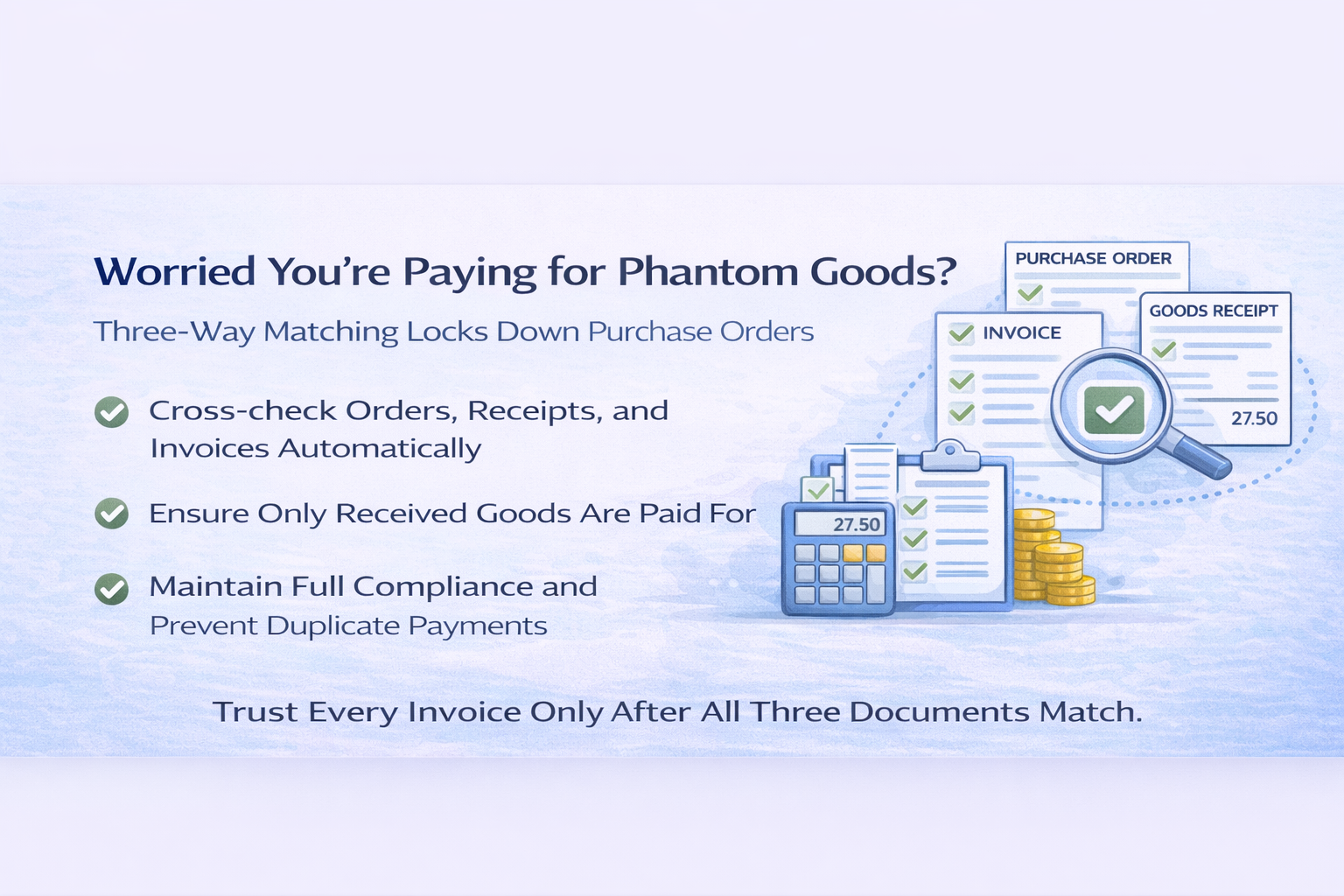
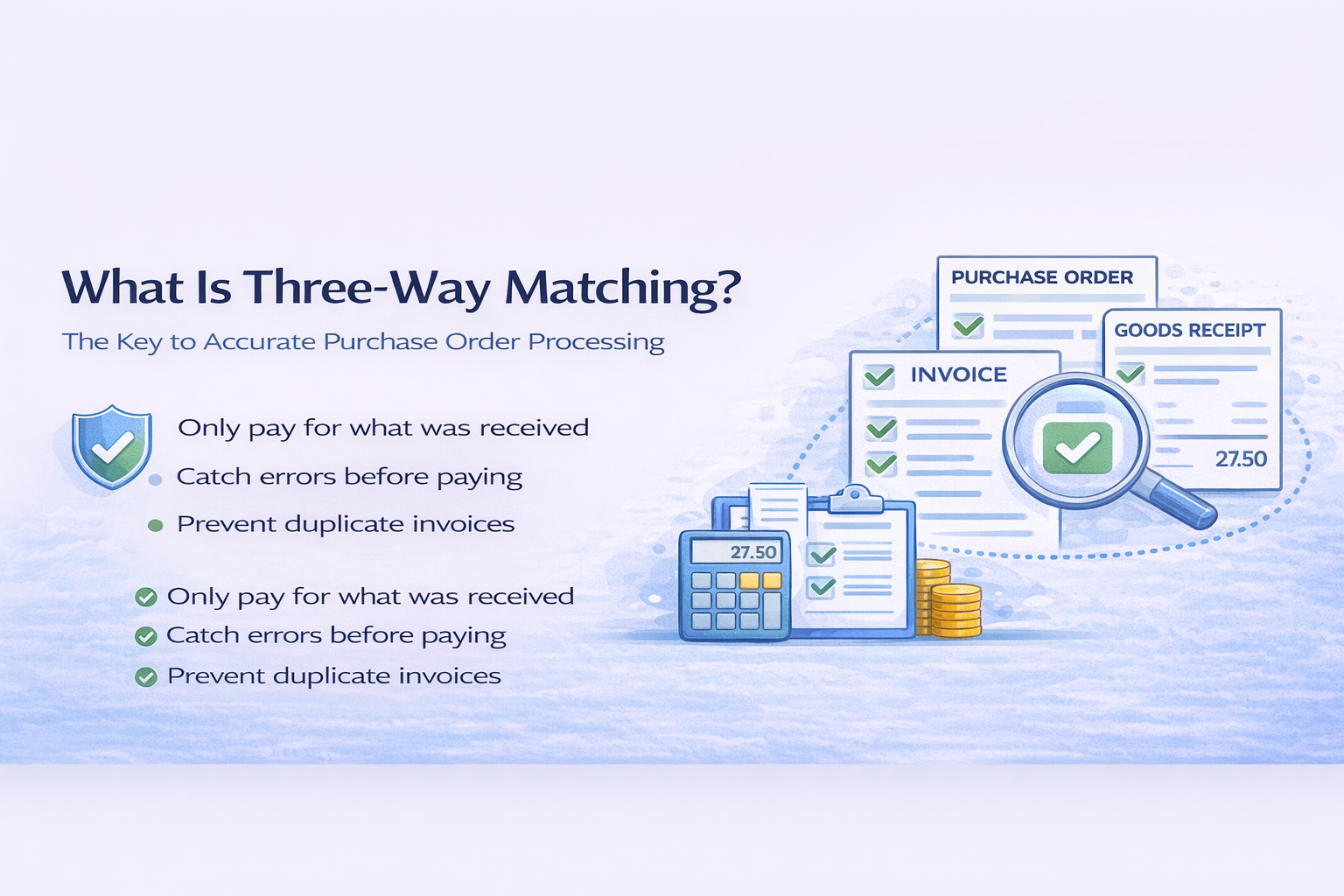
Connected to Payment Systems: Once goods delivered and invoice received, three-way matching happens automatically. Payment processes without manual intervention.
Connected to CRM: Customer orders trigger supplier POs automatically. End-to-end flow from sale to fulfilment.
We build software for one-time data entry that updates everything, and we connect your business systems so they share information automatically. Payment systems, banking, accounting, CRM—they all talk to each other like they should.
The ROI Is Dramatic
Before (Email-Based):
- Average PO cycle time: 7 days
- Average touches per PO: 8-12 people
- Cost per PO: £25-£75
- 500 POs monthly: £12,500-£37,500 monthly cost
After (Automated Workflow):
- Average PO cycle time: 2-4 hours
- Average touches per PO: 2-3 people
- Cost per PO: £2-£5
- 500 POs monthly: £1,000-£2,500 monthly cost
Monthly savings: £11,500-£35,000 Annual savings: £138,000-£420,000
And that’s just direct costs. The opportunity value of faster cycle times is harder to quantify but equally significant.
Ready to deploy AI protection across your procurement?
Contact Systematics Software Ltd today to explore how AI-powered solutions can revolutionise your operations and prepare you for the future of technology.
Nam aliquet ante porta, gravida elit, at fringilla felis suscipit.
The AI Layer
Once your PO data flows cleanly through connected systems, AI can:
Auto-Approve Routine POs: “This matches historical patterns, is within budget, and is from an approved supplier. Auto-approve.”
Flag Anomalies: “This PO is 40% above historical price for this item. Requires manager review.”
Recommend Optimal Timing: “Based on cash flow forecast and supplier terms, optimal ordering time is next Tuesday.”
Predict Approval Likelihood: “Based on current budget usage and historical patterns, this PO has 85% approval probability.”
But only with clean, connected data. You can’t layer AI on email chaos.
The Implementation Path
Phase 1: Digital Workflow Move PO approval out of email into purpose-built workflow system. Keep everything else the same. Immediate visibility and speed improvement.
Phase 2: Integration Connect PO workflow to accounting, banking, inventory. Let data flow automatically between systems.
Phase 3: Automation Add three-way matching. Auto-approvals for routine POs. Intelligent routing based on rules and AI.
Each phase delivers value. Each phase builds foundation for the next.
The Cultural Element
Moving from email to workflow requires change management:
Managers worry: “I’ll be overwhelmed with notifications” Reality: Approval takes 30 seconds on mobile. Much faster than digging through email.
Staff worry: “The system will be more bureaucratic” Reality: It’s dramatically faster and more transparent than email.
Finance worries: “We’ll lose control” Reality: You gain complete visibility and audit trails that email never provided.
The Real Question
How much longer can you afford purchase orders stuck in email?
Every day they sit there:
- Business momentum stalls
- Supplier relationships suffer
- Staff get frustrated
- Costs accumulate
- Competitors with automated workflows move faster
Ready to get your purchase orders unstuck from email?
Let’s discuss how modern workflow and integration can transform PO approval from a week-long bottleneck into a 30-second mobile tap.
📅 Book a conversation: https://calendly.com/jiteshlakhani
📞 Call directly: 0207 031 9810